TLDR: The Lawrence Welk Show ran from 1955 to 1982 and built one of the most loyal ensemble casts in television history, known as the “Musical Family.”
Most of the original stars have since passed away, but a handful, including Bobby Burgess, the Lennon Sisters, and Ralna English, are still performing or appearing on PBS reruns and live tours as of 2026.
For 27 years, Saturday night meant one thing in millions of American households: Lawrence Welk, his bubble machine, and the ensemble he called his Musical Family.
From 1955 to 1982, The Lawrence Welk Show delivered a weekly mix of ballads, polkas, tap dancing, and wholesome variety entertainment that defied the changing cultural tides around it.
While the rest of television chased youth and controversy, Welk stayed the course, and his audience never left him.
The show outlasted its ABC network run by more than a decade, continuing in syndication until 1982 and living on through PBS reruns that still air today. What made it so enduring wasn’t just the music. It was the people.
Welk assembled a cast of singers, dancers, and instrumentalists who stayed with him for years, sometimes decades, becoming familiar faces that viewers genuinely felt they knew. Some of those faces are still around. Others left legacies that their families and fans continue to honor.
Here’s a full look at where the Musical Family ended up.
What Happened to Norma Zimmer, the Champagne Lady
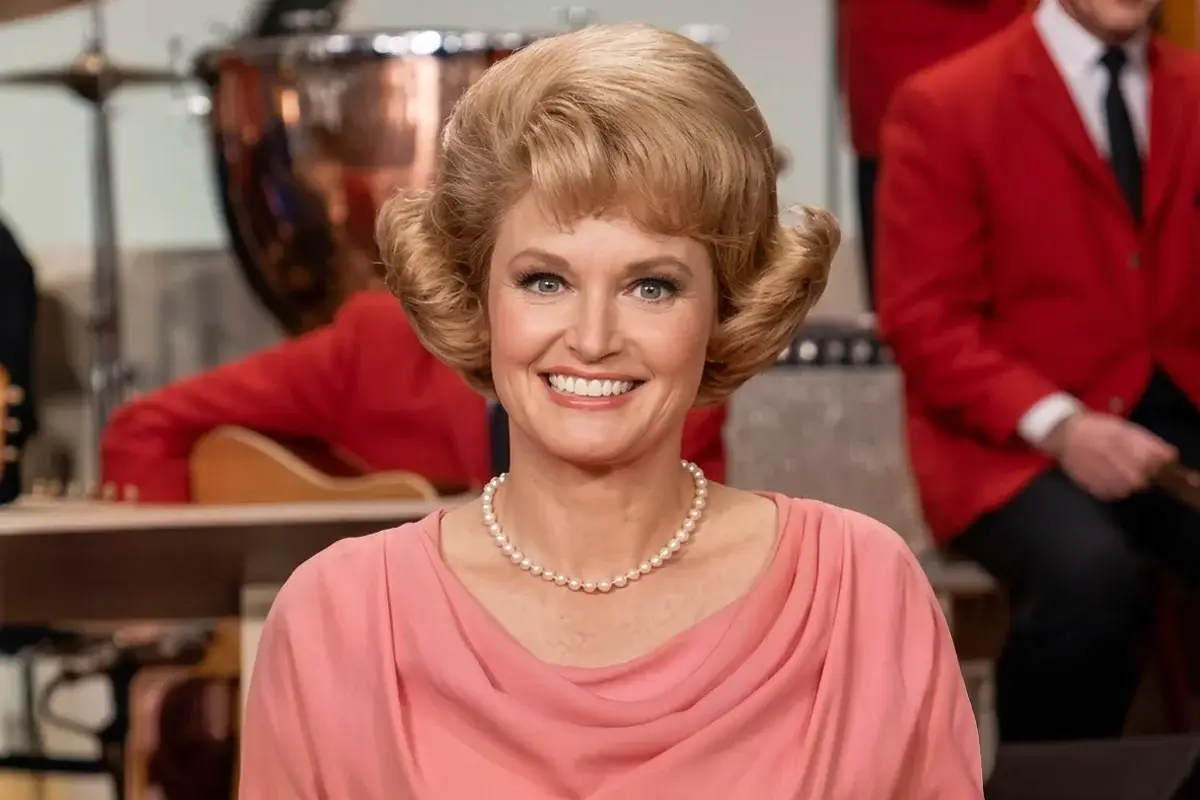
The title of “Champagne Lady” was the most coveted role for a female performer on the show, and no one held it longer or more memorably than Norma Zimmer. Born Norma Larsen in 1923 in Shoshone County, Idaho, she had already built a substantial career as a Hollywood session singer before joining Welk.
Zimmer provided the singing voice for the White Rose in Disney’s Alice in Wonderland (1951) and worked with the Norman Luboff Choir and the Ken Darby Singers, contributing to dozens of film soundtracks that audiences heard without ever knowing her name.
She joined the Welk cast on New Year’s Eve 1960, following a year of temporary replacements after the departure of original Champagne Lady Alice Lon.

Her crystalline soprano and graceful weekly waltzes with Welk made her the emotional center of the show for its entire remaining run through 1982.
Off-screen, Zimmer was a devout Christian whose faith shaped everything she did after the show ended.
She became a frequent soloist at Billy Graham Crusades, appeared regularly on the Hour of Power, and was also a gifted visual artist who completed more than 100 portraits in her later years.
She remained married to property developer Randy Zimmer from 1944 until his death in 2008. Norma Zimmer passed away on May 10, 2011, in Brea, California, at the age of 87.
How Bobby Burgess Went From Mouseketeer to Musical Family Mainstay

Bobby Burgess holds a unique distinction in television history. He found fame twice before turning 25.
Born in Long Beach, California in 1941, Burgess was an original Mouseketeer on Walt Disney’s The Mickey Mouse Club before joining the Welk cast in 1961 after winning a dance contest with his partner Barbara Boylan.
He went on to become one of the show’s longest-serving cast members, appearing through its final episode in 1982.
Burgess danced with three partners over his two decades on the show: Barbara Boylan from 1961 to 1967, Cissy King from 1967 to 1978, and Elaine Balden from 1979 through the finale.
He became part of the Musical Family in the most literal sense possible when he married Kristie Floren, daughter of lead accordionist Myron Floren, on Valentine’s Day in 1971.
Now 84 years old, Burgess remains one of the most active surviving members of the cast. He teaches through the Burgess Cotillion in California, hosts wraparound interview segments for the PBS reruns, and continues to appear on the annual Live Lawrence Welk Show tours alongside Elaine Balden.
The Lennon Sisters and the Tragedy That Followed Them Off Stage

No cast members were more beloved than the Lennon Sisters, who debuted on the show on Christmas Eve 1955 and stayed for 13 years. Dianne, Peggy, Kathy, and Janet Lennon first appeared as teenagers and literally grew up in front of the television audience.
At the height of their popularity, they were featured in celebrity tabloid magazines alongside mainstream film and television stars. Their departure from the show in 1968 came amid reported tensions over career control, as the sisters sought greater independence over their bookings and creative direction.
Then, in 1969, the family was struck by tragedy. Their father, Bert Lennon, was murdered by a stalker who had developed an obsession with Kathy. The loss reshaped the family’s private world entirely, even as their public careers continued.
After leaving Welk, the sisters launched their own variety work and became regulars on The Andy Williams Show. By the mid-1990s they had become a cornerstone of the Branson, Missouri music scene, headlining the Welk Champagne Theater.
The group’s lineup has shifted over the decades. Peggy retired in 1999, followed by Dianne in 2001, with younger sister Mimi stepping in to keep the trio active. As of 2026, all four original Lennon Sisters are still alive. Dianne is 86, Peggy is 84, Kathy is 82, and Janet is 79.
Kathy and Janet remain actively touring, and the group is currently marking more than 70 years in entertainment, placing them among the longest-performing vocal groups in American history.
Myron Floren, the Happy Norwegian Who Never Stopped Playing

Myron Floren was arguably the second most important figure in the show’s history. Born in South Dakota in 1919, Floren joined the Welk organization in 1950 after a chance encounter in St. Louis and spent the next 32 years as the show’s lead accordionist and assistant conductor.
His energetic polkas and waltzes gave the show its rhythmic backbone, and his warm nickname, “The Happy Norwegian,” captured everything audiences loved about him.
After the show ended, Floren maintained a relentless touring schedule, often performing more than 200 dates a year at ethnic festivals including German Fest in Milwaukee and Norsk Høstfest in North Dakota. He remained a featured headliner at the Welk resort in Branson well into the 1990s.
Floren passed away from cancer on July 23, 2005, at the age of 85. His daughter Kristie, who married Bobby Burgess in 1971, keeps the family connection to the Musical Family alive to this day.
Pete Fountain Left the Show and Became a Jazz Legend

Pete Fountain joined the Welk cast in 1957 as a featured clarinet soloist and became one of its biggest stars almost immediately.
His fluid, warm tone and the genuine heat of his playing stood out from everything else on the program. The problem was that Fountain was a jazz musician to his core, and Welk ran his show with total control over every arrangement.
The breaking point came during a live Christmas special in late 1958. Welk had instructed Fountain to play “Silver Bells” exactly as written.
On live television, Fountain swung it anyway. His departure followed shortly after. His summary of the situation became one of the most quoted lines in jazz history: “Champagne and bourbon don’t mix.”
He returned to New Orleans, opened his own club on Bourbon Street, recorded more than 40 hit albums, appeared on The Tonight Show nearly 60 times, and became the musician most synonymous with New Orleans jazz for half a century.
He died on August 6, 2016, at age 86, with a second-line jazz funeral through the French Quarter as his send-off.
Dick Dale Was the Musical Director for 31 Years

Dick Dale joined the Welk cast in 1951 as a baritone saxophonist and vocalist and stayed for the show’s entire remaining run through 1982, making him one of its longest-serving members.
He was Lawrence Welk’s original “boy singer” and eventually served as musical director, shaping the sound of the program across three decades.
He is best remembered for a moment that was equal parts famous and accidental. In 1971, Dale and Gail Farrell performed “One Toke Over the Line” on national television as a cheerful, clean-cut duet.
Welk introduced it to the audience as a modern spiritual. The song is about marijuana.
The writers said the broadcast gave them more publicity than they could have paid for.
Dale died on December 26, 2014, in Algona, Iowa, at age 88, returning in his final years to the same small town where he had started playing saxophone as a seventh grader more than six decades earlier.
Arthur Duncan Was a Historic Hire and Lived to 97

When Lawrence Welk hired tap dancer Arthur Duncan as a regular cast member in 1964, he made television history. Duncan became the first African-American performer to appear regularly on a nationally syndicated variety series since 1951.
The decision wasn’t without controversy. Stations in parts of the American South threatened to drop the show in protest. Welk refused to fire Duncan, and the show kept its affiliates. It was one of the most consequential stands Welk ever took.
Duncan’s career had roots going back to the 1940s. He received an early career break from Betty White, who insisted on his inclusion on her 1954 television program despite the racial climate of the era. He remained with the Welk program through its final episode in 1982.
Long after the show ended, Duncan continued performing well into his 90s, appearing on Little Big Shots in 2017 at age 91. He passed away from a stroke and pneumonia in Moreno Valley, California, on January 4, 2023, at the age of 97.
Guy Hovis and Ralna English Kept Performing Long After Their Divorce

Guy Hovis and Ralna English joined the cast in 1969 and 1970 respectively and quickly became the show’s most popular vocal duo.
Their harmonies on gospel and pop standards were a centerpiece of the syndicated years, and the fact that they were also married in real life gave their performances an extra warmth that audiences responded to deeply.
The marriage ended in divorce in 1984. But the professional partnership didn’t. Hovis and English continued touring together for decades, appearing on PBS specials and reunion shows, maintaining a working relationship long after their personal one had ended.
Hovis also pursued a second career in politics, serving as a state director for Senator Trent Lott in Mississippi. He passed away on January 22, 2026, at the age of 84. Ralna English, now 83, continues to perform jazz and gospel music and lives in Scottsdale, Arizona.
Larry Hooper Was the Voice in the Basement

Larry Hooper was one of the show’s original cast members, joining Welk in the early 1950s as a bass vocalist whose deep, resonant voice anchored the ensemble’s lower register for nearly two decades. He was a fixture of the show’s network years on ABC, providing bass solos and ensemble harmony on everything from gospel numbers to novelty songs.
Hooper left the show in 1972 after suffering a stroke that affected his ability to perform at full capacity.
He died on December 15, 1987, in Los Angeles, at the age of 67. Among the show’s original cast members, he remains one of the least documented despite his long tenure, which makes the full story of his years with Welk worth reading in detail.
The Aldridge Sisters and Otwell Twins Defined the Show’s Final Era
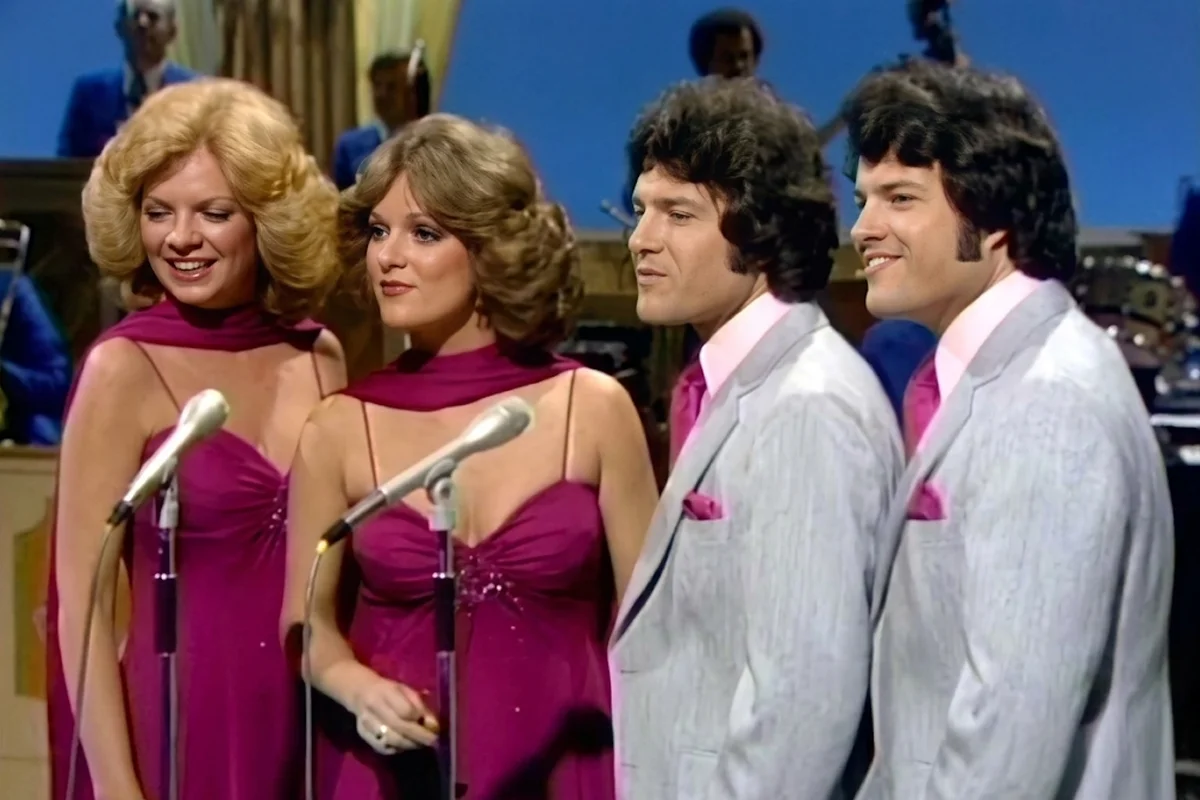
When Lawrence Welk needed to refresh his cast for the syndication era, he found two sibling acts in the same season and had the instinct to combine them.
Sherry and Sheila Aldridge from North Carolina had auditioned four times before landing their spot.
David and Roger Otwell, identical twins from Tulia, Texas, got their call after Welk heard their demo tape and phoned them personally.
Welk put them in a room together and gave them 20 minutes to come up with a song. They improvised tight four-part harmonies on “Oh, Shenandoah” and the quartet was born on the spot.
The Aldridge Sisters and Otwell Twins became one of the most popular acts of the show’s final five years, blending the sisters’ polished soprano harmonies with the twins’ acoustic guitar work and Texan warmth.
They performed together from 1977 through the final episode in 1982 and remained connected through the Branson reunion circuit for years afterward.
As of 2025-2026, all four are believed to be alive. Sherry and Sheila Aldridge are retired and living privately in the South. David and Roger Otwell, now 69, are living in the Amarillo area of Texas where they built business careers after the show ended.
Ava Barber Was Lawrence’s Country Girl
Ava Barber joined the show in 1974 after her mother wrote Lawrence Welk a letter and enclosed a demo record suggesting her daughter as a country replacement following Lynn Anderson’s departure.
Welk auditioned her in a tent at a Nashville golf tournament, arranged her plane tickets himself, and hired her on air at the end of her debut performance with a handshake and no formal contract.
She was the show’s resident country singer for eight years and built a genuine parallel recording career, hitting number 13 on the Billboard country charts in 1978 with “Bucket to the South.”
After the show ended she returned to Knoxville, formed a band with her husband Roger Sullivan, opened a theater in Pigeon Forge with Dick Dale, and performed in Branson for years.
At 71 she is still recording and living in the Knoxville area.
Mary Lou Metzger Is Still the Heart of the PBS Era
Mary Lou Metzger joined the show in 1970 at 19 after auditioning for Welk in Los Angeles with an a cappella performance of “How Are Things in Glocca Morra?”
She stayed for 12 years, becoming known for her vocal trio with Sandi Griffiths and Gail Farrell, her tap-dancing routines with Jack Imel, and her role as Welk’s closing dance partner at the end of nearly every episode.
She married the show’s bassist Richard Maloof in 1973 and was with him for 51 years until his death in May 2024.
Since the show ended she has produced Welk reunion shows in Branson, co-founded a Los Angeles theater company, and hosted the PBS wraparound segments that have kept the Musical Family alive on more than 250 stations.
At 75 she remains one of the most active surviving members of the original cast.
Where the Rest of the Musical Family Ended Up
Joe Feeney, the show’s beloved Irish tenor and a regular since 1957, became famous for his renditions of “Danny Boy” and other ballads that resonated deeply with the show’s older audience. He continued performing in solo concerts and reunion specials after the show ended.
Feeney died on April 16, 2008, in Carlsbad, California, at 76. His family noted a bitter irony: despite being a lifelong non-smoker, he likely developed emphysema from decades of exposure to secondhand smoke in the nightclubs and casinos where the Musical Family toured each summer.
Cissy King, Bobby Burgess’s dance partner from 1967 to 1978, transitioned into theater and solo cabaret after leaving the show. She toured with the production Always… Patsy Cline and has continued producing theatrical events. Now 80 years old, she lives in Albuquerque, New Mexico.
Bob Ralston, the show’s piano and organ virtuoso from 1963 to 1982, spent his post-Welk decades championing the preservation of theater pipe organs across the United States. He recorded hundreds of solo albums and guest-conducted symphony orchestras. Ralston passed away in Los Angeles on July 2, 2025, exactly on his 87th birthday.
Tom Netherton Was Discovered in North Dakota and Became the Show’s Balladeer

Tom Netherton joined The Lawrence Welk Show in 1973 after being discovered performing in the Medora Musical in North Dakota, one of the more unlikely origin stories in the show’s history.
His rich baritone voice and striking presence made him an immediate audience favorite, and his preference for Contemporary Christian material gave the syndicated years a distinctly gospel-influenced character.
After the show ended, Netherton recorded gospel music and performed in theatrical productions including Oklahoma! He died on January 7, 2018, at the age of 70, from complications of pneumonia and influenza while receiving treatment at a VA hospital in Nashville.
His death at a relatively young age, and the VA hospital setting, left many fans with unanswered questions about his final years.
Jo Ann Castle Was the Queen of the Honky-Tonk Piano

Jo Ann Castle joined The Lawrence Welk Show in 1959 and became one of its most visually distinctive performers almost immediately.
Her signature was a brightly painted upright piano, a prop that became as recognizable to Saturday night audiences as Welk’s bubble machine. Her high-energy ragtime and honky-tonk style provided a weekly jolt of pure entertainment that stood out from the show’s more sedate vocal numbers.
She stayed on the show for a decade before departing in 1969 and went on to build a substantial career in Las Vegas and later in Branson, Missouri, where she became a fixture of the traditional entertainment circuit. As of 2026, Jo Ann Castle is 86 years old and remains one of the longest-surviving members of the original Musical Family.
Anacani Was the Voice Mexico Sent to Saturday Night TV

Anacani joined the show in 1973 after Lawrence Welk discovered her performing at his resort in Escondido, California. Her warm soprano and natural presence made her an immediate audience favorite, and she became one of the most distinctive voices in the show’s final decade, performing Mexican folk songs, ballads, and pop numbers in both English and Spanish.
Her presence on the show carried cultural significance that the format rarely acknowledged directly. She was one of the very few non-Anglo cast members in the show’s history, and for Mexican-American viewers watching on Saturday nights, she represented something the Champagne Music world had never quite offered before.
After the show ended, Anacani built a varied post-Welk career as a symphony guest soloist and clothing designer. Now 71, she continues to appear on the Live Lawrence Welk Show reunion tours alongside Bobby Burgess, Mary Lou Metzger, and Ralna English.
The Show That Never Really Ended
What separates the Lawrence Welk Musical Family from the cast of almost any other classic variety show is that they never quite stopped.
The PBS reruns still air in many markets on Saturday nights, the same time slot the show occupied during its original run.
The annual Live Lawrence Welk Show tours, typically featuring Bobby Burgess, Mary Lou Metzger, Gail Farrell, Ralna English, Anacani, and Ava Barber, bring the Champagne Style to audiences who may never have seen it the first time around.
Lawrence Welk himself died of pneumonia on May 17, 1992, at age 89, at his Santa Monica home, surrounded by his family. He is buried at Holy Cross Cemetery in Culver City, California.
But the organization he built, the Musical Family he cultivated, and the audience loyalty he earned across three decades have proven more durable than anyone could have predicted.
For a show that critics dismissed as square and out of touch, The Lawrence Welk Show has had a remarkably long last laugh.
If you enjoyed this look at classic American television, the cast stories from The Beverly Hillbillies, Petticoat Junction, and Green Acres cover the rural CBS comedies that shared the same audience and the same era.